




Introduction: Why Nintendo Joy-Cons matters
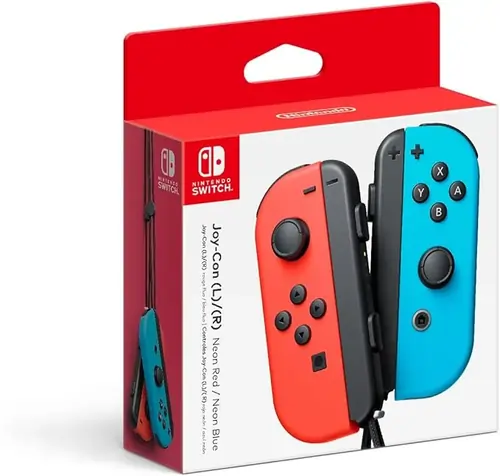
Apart from the system itself, one aspect of Nintendo's 2017 reveal of the Switch attracted media attention. Two little, removable Nintendo Joy-Cons linked to either border of the display offered the true shock. Though at first glance they looked simple and almost like toys, these tiny controllers soon showed their abundance of technology, originality, and fearless ideas.
Unlike conventional game controllers geared just to buttons and analog sticks, Joy-Cons were created to adapt. They could be used either together, separately, wirelessly, or linked straight to the console. Central to Nintendo's vision, this flexibility allowed gaming to fit into daily life whether you were at home, on a trip, or hanging with friends.
Celebrated for their creativity and criticized for their defects, Joy-Cons have developed into among Nintendo's most recognizable hardware designs over time and are always debated by players worldwide.
The Design Philosophy of Joy-Cons
From its rivals, Nintendo has always charted a unique course. The business emphasizes how games feel to play rather than on pure force. This idea is well embodied by Joy-Cons.
Though powerful enough to work as a full controller, each Joy-Con is tiny enough to fit one hand. They look like a conventional gamepad once brought together. When split, they turn two independent controllers; ideal for local multiplayer without more hardware.
This design helps Nintendo achieve its long-time aim: reducing obstacles to play. With Joy-Cons, playing multiplayer games doesn't require extra controllers bought. You simply give a pal one Joy-Con and start playing.
Important Nintendo Joy-Con Characteristics
1. Detachable and modular design
The Joy-Cons Grip or the Nintendo Switch system can both be mounted with wireless Joy-Cons. This modularity enables players to easily adapt their approach: tabletop, docked, or handheld.
2. Motion controls
Every Joy-Con includes an accelerometer and a gyroscope, which allows exact motion tracking. Some games have this feature which makes aiming or steering feels intuitive and immersive.
3. HD rumble technology
HD Rumble gives nuanced response unlike conventional vibrating motors. Players could have delicate senses like rolling marbles, water motion, or surface textures. Although not every game makes full use of it, HD Rumble is still among Joy-most creative characteristics.
4. Infrared Motion Sensor
An infrared camera on the right Joy-Con can identify shapes, motion, even distance. Creative applications of this technology are shown in games like 1-2-Switch and Nintendo Labo.
5. Internal NFC Compatibility
Players can use Joy-Cons to access characters, items, or rewards across supported games by scanning Amiibo via NFC.
Multiplayer games and Joy-Cons
One of their most obvious benefits, the Joy-Cons have transformed local multiplayer gaming. Nintendo started to embrace shared events at a time sofa co-op was breaking apart.
Some games thrive because Joy-Cons let many gamers start playing immediately: Mario Party Superstars, Super Smash Bros. Ultimate, and Overcooked among them. Supporting Nintendo's family-friendliness keeps social gaming alive.
Color Variation and customization
Nintendo knows how hardware links gamers emotionally. From traditional neon red and blue to pastel colors, themed models, and special partnerships, Joy-Cons come in a variety of hues.
Simple means for gamers to customize their Switch without purchasing an entire new system are swapping Joy-Cons. This has made Joy-Cons collector accessories as well as practical devices.
The Joy-Con Drift Debates
No conversation of Joy-Cons is finished without covering Joy-Con drift, a common problem in which analog sticks register movement even when untouched.
What causes Drift?
Joy-Con drift is thought to be caused by wear inside the analog stick mechanism, where dust or decomposition impacts input precision.
How Nintendo Responds
Nintendo recognizes the problem and, in several areas, gives free repairs independent of warranty status. Many players still find drifting to be a sensitive subject, though, which has set off lawsuits in several nations.
Drift still affects conversations about the long-term endurance of Joy-Cons even with upgrades in more recent hardware versions.
Joy-Cons vs Pro Controller
Some gamers would rather use the Nintendo Switch Pro Controller for prolonged play sessions even if Joy-Cons provide flexibility.
Joy-Cons advantages:
• Portability
• Built-in multiplayer
• Movement controls and unusual qualities
Pro Controller advantages:
• Improved ergonomics
• Longer battery life
• Wider buttons and analog sticks
The Pro Controller enhances Joy-Cons instead of substituting them. Nintendo provides players with choices rather than imposing one solution.
Joy-Cons in different types of games
Action and Adventure
In adventure games like Zelda, motion aiming and HD Rumble improve immersion.
Party games
Here, Joy-Cons shine brightest supporting fast, intuitive gameplay for everyone, all ages.
Competitive gaming
Although Joy-Cons are capable, many competitive players choose traditional controllers for accuracy.
This adaptability supports Nintendo's approach: Joy-Cons are made for everybody; they aren't meant for just one kind of gamer.
Third-party Joy-Con alternatives
Joy-Cons' popularity has given rise to several third-party substitutes. Often these provide:
• Improved ergonomics
• Hall-effect analog sticks to stop drifting
• Decreased costs
Many lack amenities like HD Rumble or Amiibo support, though, therefore official Joy-Cons still provide the most thorough experience.
The Future of Nintendo Joy-Cons
Joy-Cons' future is much discussed as Nintendo gets ready for the next wave of gear. Nintendo will either modify the current design or debut a totally different controller concept.
It's rather apparent that Nintendo's identity will continue to center on the Joy-Con philosophy—flexibility, creativity, and social play.
Conclusion: A Hazardous Experiment Rewarded
Nintendo Joy-Cons represent one of the boldest controller concepts in gaming history even if not flawless. They prioritize shared experiences, accessibility, and pleasure over traditional expectations of what a controller ought to be.
Whether you praise them for their creativity or condemn them for their failings, Joy-Cons have undoubtedly changed games played. In genuine Nintendo style, they remind us that sometimes gaming only has to be enjoyable rather than always have to be serious.



Write your comment